Hitoiki.
Creativity, craft, and why the detours matter

I was sitting in front of my computer with a blank screen.
I had a moment where I was blocked, I didn’t know what kind of content to put out and i tried intellectualizing and strategizing something that can only be felt.
After weeks of this creative block, I come across this Japanese calligraphy class, for a while I hesitate whether i should commit to the class. But this feeling, this hesitation is what pushes me to move forward, so I decide to go.
I walk into this two-story condo with paintings on the wall, high ceilings and ambient lighting. There’s this friendly cat who greets me and brushes up against my leg.
I meet the practitioner, a tall Japanese woman who welcomes us warmly.
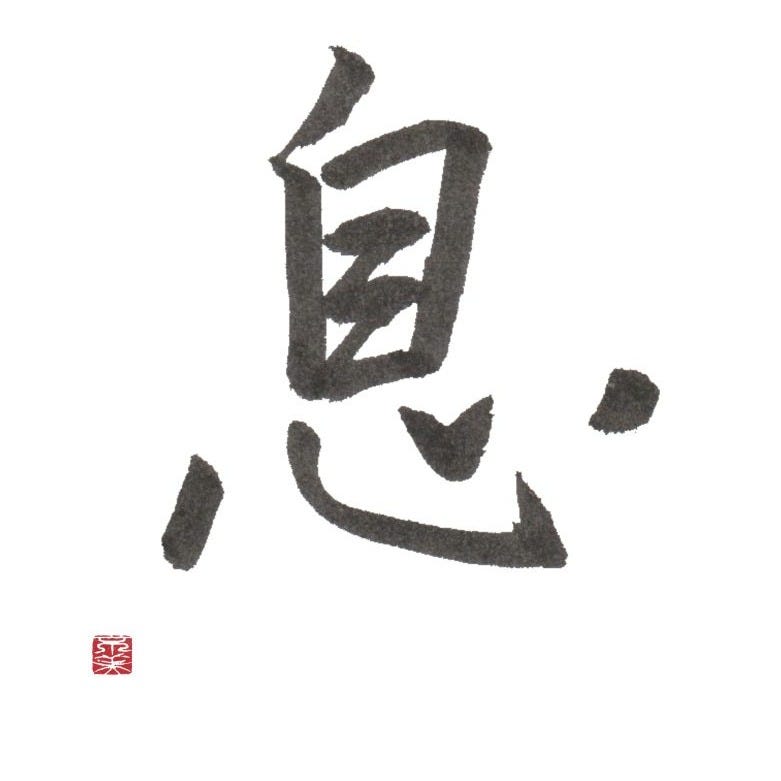
We all move to sit in this rooftop garden, and she prefaces what today will be like. We start with a tea ceremony, she invites us to sit with this tea, to be present with it. She shares the Japanese word we’ll be working on today. “Hitoiki” meaning “one breath”.
In everyday conversation it means to take a short pause, a break, or a breather, which if you’ve been following my story, how much that was necessary for me. She asks us to write what this means to us as a first, “one breath”.
For me it meant decisiveness, and pure expression. After some time of sitting with this, we move along with some meditation to set the pace of the workshop.
We move downstairs, into a dimly lit room with tatami mats, low tables, and cushions. We take a seat and she explains the practice of calligraphy as presence, as an extension of you.
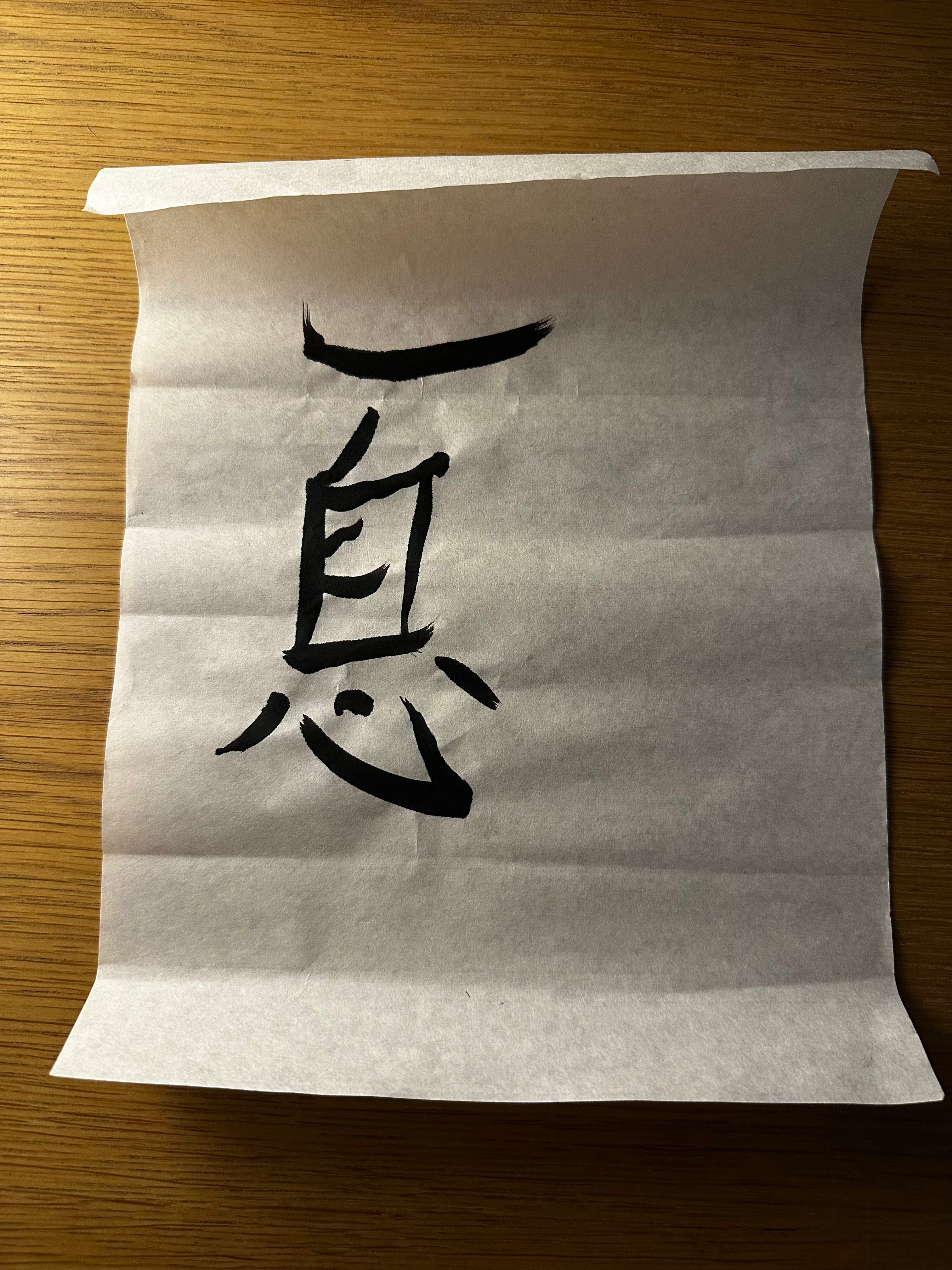
As i work on putting this character on paper, i try my hardest to replicate an exact copy, some come out blocky, another comes out bleeding too much ink.
As the class goes on, she shows examples of different styles and i notice how some look completely different than what the original character looked like.
I realized that trying to exactly copy something else is what was keeping me from actually feeling the art, again i was trying to intellectualize it.
On my last sheet of paper i decide to let go. The brush glides along the paper with ease, and no hesitation, a moment in flow.
This one feels different, i thought to myself.
When i looked, instead of the blocky, ink-bled paper, i found something more unique, an expression of myself on that paper.
In that moment, it was like a light turned on in my mind.
This is the answer. Flow.
You can’t force an idea, let alone creativity. You have to go and experience life in different forms, and that in turn is the material for your work, for your expression. I’ve never felt more full of creativity and full of life in that moment.
It brought me back to using my experiences in part of my work, and using the lessons that i’ve learned to fuel what I do.
I really admired Miyamoto Musashi, with how he looked at Martial Arts as an actual art and not simply violence.
He was a master swordsman who had 62 undefeated duels, he had this to say about being the best in his craft.
In order to become the most efficient warrior, he took up poetry, art, and dance to understand life in all angles and in turn, truly understand himself on a deeper level to show up at full capacity for his duels.
That idea cuts deep. Musashi wasn’t being poetic for its own sake, he was describing a functional truth about how mastery works.
The principle is this: range creates depth.
When you only train in one area, you get good at that thing. But you can only see things from that perspective.
When you move between disciplines, fighting, painting, writing, building, you start to see the underlying patterns that you normally wouldn’t.
The same principles that make a sword strike precise make a brushstroke precise. The stillness required to write a haiku is the same stillness required before a duel, or during meditation.
There are fundamental values that carry over when you invest in different practices.
Living broadly isn’t a distraction from your craft. It’s how you develop the internal library your craft draws from.
Everything that i’ve learned from Taekwondo, sports, dance, and video games all tie back to everything that i’m doing in some way, and i apply them into my work.
A few ways this actually shows up:
Cross-domain pattern recognition. When you’ve done enough different things, you start seeing how problems in one area are solved problems in another. You borrow the solution without even trying to.
Emotional range feeds creative range. You can’t write, film, coach, or build something that resonates if your inner world is narrow. The person who’s only ever trained is going to create work that feels thin. The person who’s grieved, failed, fallen in love, or gotten lost, they have material.
Presence over performance. Musashi’s deeper point wasn’t “collect hobbies.” It was show up fully to your life. The warrior who treats every meal, every conversation, every walk as part of the practice, that person is different from one who only switches on in the gym or at the desk.
The practical lesson is uncomfortable for high-achievers who want to optimize everything: the “wasted” time isn’t wasted. The random conversation, the city you explored without a plan, the spontaneous detours you got pulled into, or the skill you picked up and dropped, that’s all going in somewhere. The experience is what builds you into who you are. If you keep yourself open to these experiences, they may lead you exactly where you need to be.